
What is a pipeline? A summary of key pipeline terms to know.
Reading time: 10 minutes
Pipelines are currently a trending keyword searched by many business people. They play a crucial role in a variety of applications, from the oil and gas industry to project management and information technology. That’s why more and more businesses are interested in and investing in this pipeline model.
What does the term “pipeline” mean?
A pipeline is a plan or product that is currently under discussion, being prepared for production, or will be finalized in the future.
Simply put, a pipeline is a sequential process of developing pathways to support a business’s operations. Successfully implementing a pipeline allows you to easily identify where potential customers are located in the conversion process. From there, you can develop appropriate strategies to convert customers effectively and quickly.
What is a pipeline?
Pipelines in business
In business, the Pipeline model is understood as a seamless, tubular business process that serves as a foundation for businesses to visualize, plan specifically, and generate revenue.
In sales, the pipeline process helps to understand each stage, status, and development of a project. Therefore, in business, the pipeline is considered a predictor of the health of a corporation or enterprise.
Pipeline in Marketing
Similar to sales, the marketing pipeline refers to the marketing process of a business, such as market research and identifying potential customers. Based on this, businesses can approach and attract customers and increase conversions.
Additionally, this process can be integrated with the Sales Pipeline process, especially for small businesses.
Pipeline in IT
In IT, a pipeline is a system or series of steps in data processing. Data must pass through these steps to be transformed from input to a target output. Due to its sequential nature, pipelines can be applied to many different purposes, from data processing in web applications to scientific data analysis, image processing, or even natural language processing.

Vietnam’s leading AI-powered multi-channel virtual call center.
What is a CI/CD Pipeline?
The CI/CD Pipeline (Continuous Integration/Continuous Delivery Pipeline) is an automated process in software development that ensures source code is tested, built, and deployed continuously and automatically. It is a crucial part of the continuous software development methodology, designed to optimize application development and deployment. Simultaneously, CI/CD minimizes problems and risks during the development process for businesses.
What is a Jenkins pipeline?
Jenkins in Pipeline is a popular open-source continuous integration (CI) system widely used in software development. Jenkins provides an environment that automates the process of continuous code testing, application building, and deployment. Pipeline Jenkins is designed to help software development teams create high-quality applications efficiently and ensure that changes in source code can be tested and deployed quickly and reliably.
What is a Data Pipeline?
A data pipeline is an automated system or process used to move, process, and transform data from source to destination within a data system or data environment. The goal of a data pipeline is to make data readily available, reliable, and usable for analysis, reporting, or data storage purposes.
What is a pipeline project?
A pipeline project is a standardized method used by project managers to track multiple projects, from concept to execution. This method ensures that your project is on schedule, that resources are being allocated effectively, and that workflows are functioning correctly.
- Pipeline projects help enhance the goals and values of companies and businesses.
- All important and urgent activities are accurately communicated to the relevant staff.
- Ensure that contingency plans are in place for unexpected situations, with the aim of responding promptly.
The difference between Sales Pipeline and Sales Funnels
In brief, sales pipelines and sales funnels have several fundamental differences as follows:
- Sales Pipeline
This is a sales process that includes tasks arranged in a scientific manner, ensuring efficient sales operations. To build sales, you need to examine the stages of this process to understand delays, obstacles, or challenges that hinder deals. Reviewing the stages in the sales pipeline is also known as sales pipeline management or pipeline strategy development.
- Sales Funnels
If a sales pipeline is likened to a pipe, then the sales funnel process can be envisioned as a funnel. The common point of both sales methods is to convert potential customers into actual customers.
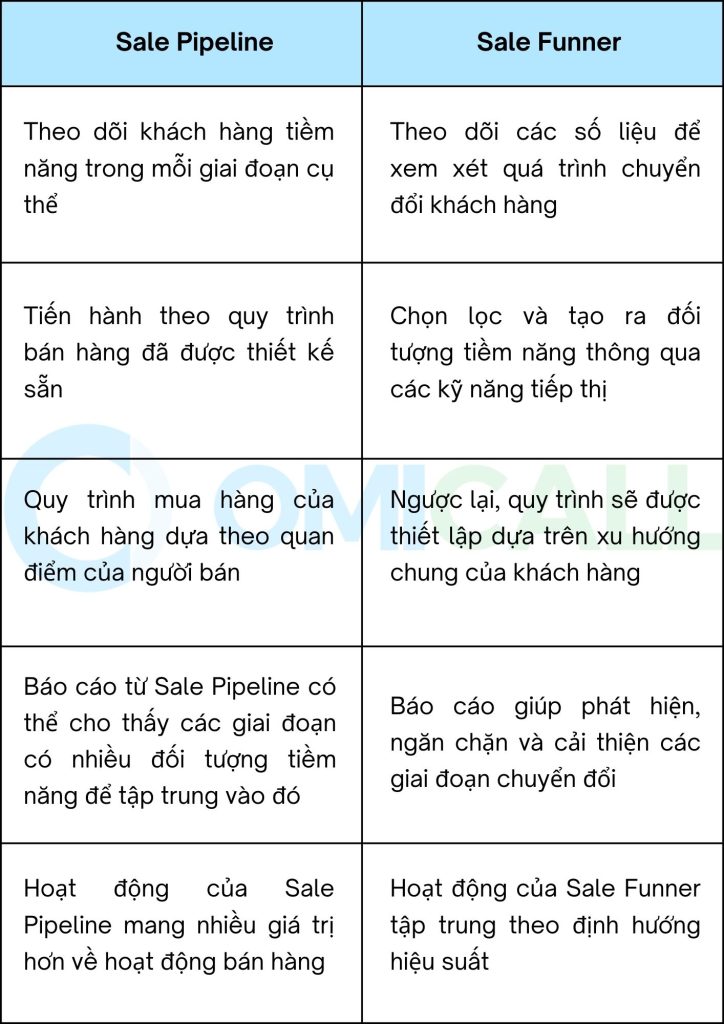
Comparison of Sales Pipeline and Sales Funner
Pipelines and their undeniable benefits
Besides its key concepts, the Pipeline model offers numerous benefits across various fields. Applying the Pipeline model in business makes it easier to identify the customer’s position, allowing business owners to develop smarter business strategies.
Currently, pipelines are considered to offer many valuable benefits to businesses. Below are three typical benefits of using pipelines:
For businesses
Pipelines help businesses identify the right, consistent, and professional sales process. This, in turn, enables employees to achieve high sales results, increase product consumption, and generate greater profits.
Implementing the Pipeline model at the right time will help businesses improve the quality and optimize the productivity of their sales team.
For managers
For management, the Pipeline process provides detailed steps to help businesses generate customer conversions. At the same time, managers can easily monitor and evaluate sales staff performance, quickly identify difficulties and shortcomings, and address them promptly.
Therefore, it can be affirmed that the Pipeline is an effective tool for managers to evaluate the effectiveness of their employees’ sales performance in particular, and the overall quality and efficiency of the business in general.
For employees
As mentioned above, a business pipeline is a set of activities, a series of actions that sales staff need to perform to convert customer actions. Therefore, businesses can apply this model to create a professional sales process for all employees.
In the application of the Pipeline model , sales staff will be able to categorize customer groups. This allows the telesales team to develop customer care plans tailored to each different group. Furthermore, Pipeline facilitates easy information sharing and work reporting to superiors.
Pipelines help employees easily identify and seize opportunities, creating programs with promotional policies and incentives. All of this is done at the right time, thereby bringing significant benefits to the business.
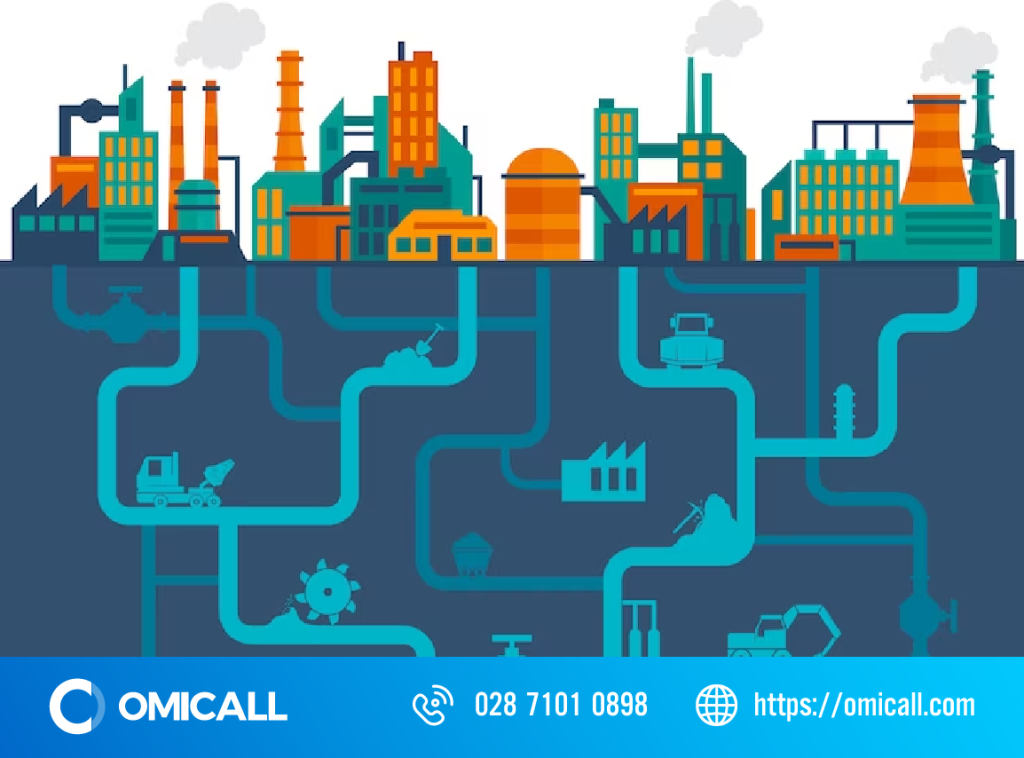
Pipelines and their undeniable benefits
5 key stages of pipeline in business.
After understanding the concepts of what a pipeline is, to achieve business success, business owners need to master the following five main stages:
Finding customers
Customers are a major factor influencing a company’s sales. Therefore, finding and gathering information about potential customers is the first thing a business needs to do. This includes market research, reaching out to customers through marketing channels, and collecting relevant information about them.
During this phase, Pipeline helps track the customer acquisition process, ensuring that information is collected efficiently and that the list of potential customers is easily managed.
Customer care and retention
Excellent customer service is one of the key factors that greatly determines the success of a strategic pipeline process. After obtaining a list of potential customers, the next step is to maintain and build relationships with them. This stage includes providing useful information, answering questions, and interacting regularly with customers via email, phone, or social media.
Through excellent customer service, Pipeline helps businesses track customer service activities, providing the necessary information to maintain relationships and ensure customer satisfaction.
Suggestions regarding the target customer group
This stage involves categorizing potential customers into groups based on shared characteristics, interests, or needs. This helps create more targeted marketing and communication campaigns.
Pipelines help track customer information and categorize them into target groups, optimizing marketing campaigns.
5 key stages of pipeline in business.
Building relationships with customers
Customer relationships are a crucial element in business success. Negotiating and persuading customers helps businesses build strong relationships. However, this stage involves building and maintaining friendly customer relationships, requiring many skills from employees such as: positive interaction, problem-solving, and providing value. This will directly influence the customer’s psychology and purchasing decisions.
The pipeline in this phase helps track and manage the relationship-building process with each customer, recording interactions and suggesting appropriate actions.
Finalize the deal and complete the process.
The final stage of the Pipeline is closing the deal and completing the sales process. Here, the potential customer makes the decision to purchase your product or service.
At this stage, if you succeed in persuading the customer, they will quickly close the deal and sign the contract. The purpose of the Pipeline in this final stage is to monitor and manage the sales process from creating offers and negotiating prices to signing the contract and completing the transaction.
In summary, each stage in the Pipeline plays a crucial role in optimizing business processes, building customer relationships, and ensuring business success. Certainly, the Pipeline will be an excellent solution to support businesses in increasing sales and competing effectively with competitors in the same industry.
Summary
Hopefully, with the information shared above, OMI has helped you understand the definition of a pipeline as well as some other useful information. Contact OMICall to receive the best support for your business!
VIHAT TECHNOLOGY Co., Ltd
Headquarters: ViHAT Building – 06 Street No. 16 (Him Lam Residential Area) – Hiep Binh Chanh Ward – Thu Duc District – Ho Chi Minh City
Hanoi Branch: Floor 15, LADECO Building, 266 Doi Can, Ba Dinh, Hanoi
Cambodia Branch: Thida Rath #154 St. 33MC, Sangkat Steung Meanchey, Khan Mean Chey, Phnom Penh

-
 What is TikTok advertising? Advertising policies and how it works.
-
 Exploring Conceptual Selling – Understanding Modern Sales Trends Correctly
-
 What is a KOC? Distinguishing between KOLs and KOCs.
-
 What Are Customer Insights? Revealing How to Effectively Uncover Them
-
 What is Digital Marketing? 10 Effective Forms of Digital Marketing
-
 What is Online Marketing? Types of Online Marketing





