

What is CSR in marketing? What factors contribute to a successful campaign?
Reading time: 5 minutes
CSR has been a popular term in business strategy development for over two decades. There are many perspectives surrounding this business opportunity, but many business owners view it as a passing trend or unnecessary external pressure. However, the truth is that it is crucial for the sustainable growth of any business or organization – especially from a marketing and branding perspective. Let’s explore in detail what CSR is in marketing and how to build a successful CSR campaign!

Vietnam’s leading AI-powered multi-channel virtual call center.
What is CSR?
CSR stands for Corporate Social Responsibility. Corporate social responsibility is a voluntary activity, not mandatory or mandated by law.
CSR refers to the total value that a company creates or gives to the nation and society, and the responsibility a company has to fulfill to stakeholders in its business operations. Stakeholders here refer to all individuals or groups that may influence or be influenced by the company’s decisions and actions, including: employees, customers, suppliers, community groups, parent or subsidiary companies, partners, investors, and shareholders.
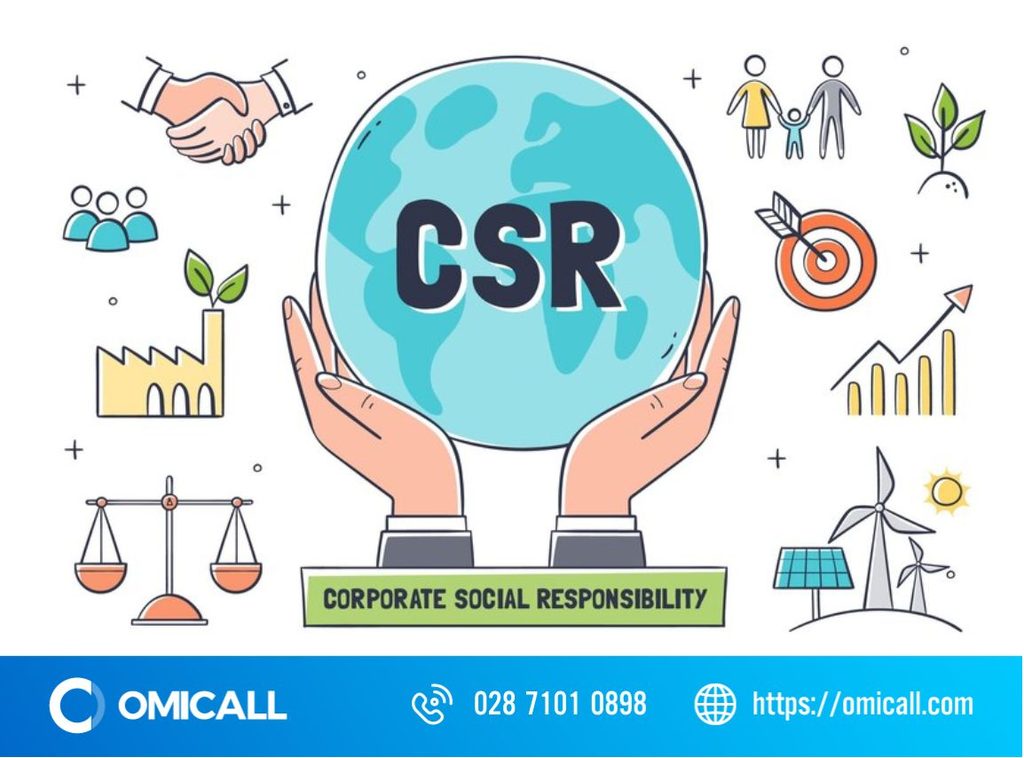
CSR stands for Corporate Social Responsibility.
What factors contribute to a successful CSR campaign?
In today’s competitive business environment, corporate social responsibility (CSR) marketing programs need to go beyond simply “doing good.” A successful CSR campaign must tell the company’s story, engage with customer and employee feedback, position the brand as a leader in social issues, and have a plan for investing in the community. To build a successful CSR campaign, each business needs:

5 factors for a successful CSR campaign.
Understand the purpose and target audience of the CSR campaign.
Before we can build a successful CSR marketing campaign, we first need to determine “Why do we need this CSR campaign?” and “Who will benefit from these CSR activities?”.
There are many reasons why a business might start a CSR campaign:
- The company is in crisis in the media.
- Our competitors are running strong CSR campaigns.
- Serious social and environmental problems exist;… And many companies participate in social responsibility activities to satisfy short-term and long-term economic values.
Regardless of the objective, businesses need to balance their own interests and those of society to set appropriate goals for their campaigns.
All activities should stem from good and honest intentions.
More and more businesses are turning to CSR marketing to differentiate themselves and build a positive brand image. While the initial purpose of a business may be profit or economic value, the ultimate goal of corporate social responsibility is to give back to the community, participate in charitable activities, and create positive social value. Honesty and integrity are always crucial elements for a successful CSR initiative.
Paying attention to issues of social concern.
Even the best CSR plans may need to be adapted to suit the changing societal landscape. For sustainability, your CSR activities need to be flexible with current societal concerns. This may include revising budgets, redirecting investments, and quickly identifying reliable nonprofit partners to implement new programs or adapt existing ones.
Integrating customers into your CSR efforts.
According to Cone Communications’ CSR research, 87% of consumers will purchase a product based on whether the company supports a social or environmental issue that concerns them. Consumers are rewarding socially responsible companies through brand loyalty, donating to charities that support the company, and purchasing products that benefit society. Furthermore, consumers are not afraid to use their purchasing power to punish companies that act irresponsibly or harm the environment through boycotts and negative media campaigns. To ensure a successful CSR marketing campaign, let your customers be an important part of your business, actively contributing to your operations.
Balancing the interests of society and businesses.
The final factor in ensuring a successful campaign and delivering tangible value to the business is that CSR programs must be strategically aligned with the company’s business model. If a company’s social responsibility efforts do not demonstrate value to customers, employees, and shareholders, they are less likely to succeed and serve their long-term purpose.
Therefore, the prerequisite is to build a CSR marketing strategy based on the company’s core competencies, balancing the interests of society and the business.
In conclusion
Building customer trust isn’t difficult, but losing it is just as easy. The fundamental element for effective and successful CSR activities in marketing is transparency and honesty.
VIHAT TECHNOLOGY Co., Ltd
Headquarters: ViHAT Building – 06 Street No. 16 (Him Lam Residential Area) – Hiep Binh Chanh Ward – Thu Duc District – Ho Chi Minh City
Hanoi Branch: Floor 15, LADECO Building, 266 Doi Can, Ba Dinh, Hanoi
Cambodia Branch: Thida Rath #154 St. 33MC, Sangkat Steung Meanchey, Khan Mean Chey, Phnom Penh

-
 What is TikTok advertising? Advertising policies and how it works.
-
 Exploring Conceptual Selling – Understanding Modern Sales Trends Correctly
-
 What is a KOC? Distinguishing between KOLs and KOCs.
-
 What Are Customer Insights? Revealing How to Effectively Uncover Them
-
 What is Digital Marketing? 10 Effective Forms of Digital Marketing
-
 What is Online Marketing? Types of Online Marketing





