

What Is a Call Center? A-Z Decoded
Reading time: 7 minutes
What is a call center, and what role does it play in customer care? Let’s explore its benefits and operational methods to see how it can be applied to your business operations.
What is a call center?
A call center is a facility where staff and customers communicate via telephone. Call centers handle both inbound and outbound calls, addressing customer inquiries regarding a company’s products and services. Staff members provide support and resolve issues faced by customers, aiming to enhance overall customer satisfaction.
Additionally, businesses can utilize call centers for marketing activities, such as announcing new products, promoting special offers, and conducting surveys.

What Is a Call Center? How Does It Benefit Businesses?
Call Center Operational Models
Call centers typically operate using the following models:
Handling Inbound Calls (Inbound Call Center)
When a customer calls the center, an automated system (IVR) routes the call to the appropriate department. A call center agent then greets the customer, identifies their needs, answers inquiries, and assists in resolving any issues.
Making Outbound Calls (Outbound Call Center)
Agents place calls to customers to provide information about products, services, and promotional offers or discounts. They also conduct surveys and gather customer feedback to improve service quality.
Combining Inbound and Outbound Calls
This model ensures seamless customer care operations and maximizes efficiency, guaranteeing that no customer calls are missed.
Throughout operations, the CRM system records and stores data. Businesses can then analyze and process this information to continuously improve operational effectiveness.
Vietnam’s leading AI-powered multi-channel virtual call center solution
Benefits of using a Call Center
For businesses
A call center serves as a vital link, helping businesses better understand their customers and implement timely improvements that align with customer expectations.
Improved customer service
Call centers enable businesses to provide rapid and effective customer support, thereby boosting satisfaction and fostering customer loyalty.
Increased revenue
Call centers allow businesses to easily reach a large number of potential customers, increasing telesales opportunities and facilitating market expansion.
Cost reduction
Call automation and streamlined request-handling processes optimize operations and reduce labor costs.
Enhanced productivity
Call center systems enable businesses to monitor and evaluate employee performance. Data-driven insights help improve operational efficiency, service quality, and overall competitiveness.
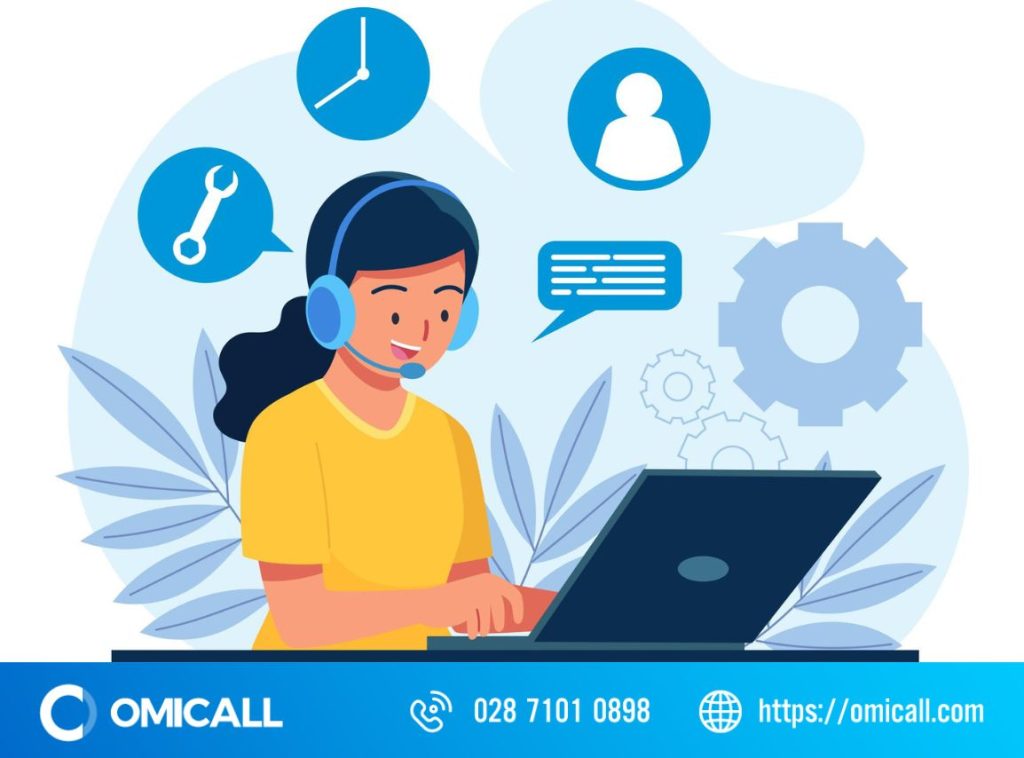
Benefits of Using a Call Center
For Customers
Timeliness: Call centers are available 24/7 to provide customers with prompt answers to their inquiries.
Convenience: Customers can easily contact the business with a single phone call, saving travel time and associated costs.
Satisfaction: Inquiries and issues are resolved promptly. Customers experience the business’s professionalism and dedication, fostering trust and long-term loyalty.
Advantages of Call Centers over Traditional Switchboards
Call centers can be deployed and scaled according to business needs without requiring bulky additional equipment. They reduce personnel costs and optimize resources while ensuring operational efficiency and high-quality customer service, thanks to process automation and data storage capabilities.
In contrast, traditional switchboards are complex to implement and support only voice calls. They rely heavily on staff performance, carry higher risks, offer lower efficiency, and do not automatically store customer data.
Exploring 4 Common Call Center Deployment Models
Call centers are currently deployed in various forms, including:
In-house Call Center
This is a call center established, owned, and operated by the business itself. The company directly handles everything from recruitment and developing customer service scripts to training the team.
Advantages
Since the business builds the system itself, it has full control over the design and operation of the call center, ensuring service quality and data security. Disadvantages
High investment and operating costs; requires a team of professional, experienced staff to ensure effective operation.
Outsourced Call Center
With this model, the business outsources its inbound or outbound call center operations to a professional service provider.
Advantages
Low costs; saves the business money and time regarding infrastructure investment and staff training.
Disadvantages
The business relinquishes some control over call center operations, which could potentially impact service quality.
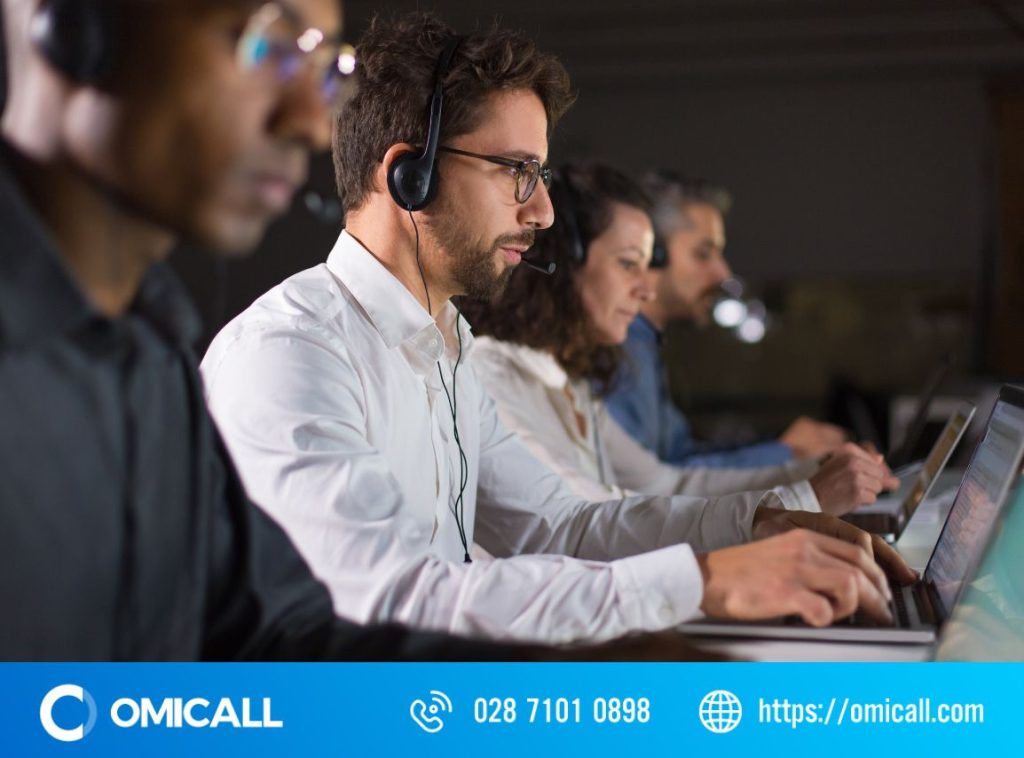
Exploring 4 Common Call Center Deployment Models
Offshore Call Center
In this model, a business outsources its call center operations to a foreign company. Enterprises with an international customer base often choose this option.
Advantages
Businesses save on language training costs for staff, ensure professional and appropriate 24/7 customer care, and boost customer satisfaction.
Disadvantages
High costs; the business loses some control over call center operations, which can impact service quality.
Virtual Call Center
This model operates based on cloud technology. With an internet connection, any device can function as a call center terminal from any location. Due to its outstanding benefits, the virtual call center model is currently highly popular among businesses.
Advantages
Low investment costs; easy to deploy and use. Features a wide range of integrated functions and is accessible from anywhere with internet access. Allows for rapid scalability.
Disadvantages
Limited customization options; high dependency on the service provider.
Conclusion
Businesses should consider factors such as organizational size and needs, investment budget, and operational management capabilities when selecting the most suitable model. We hope this article has clarified the concept of a call center and provided the necessary information for businesses to choose the best operational model for their needs.
OMICall is a leading AI-powered virtual call center solution in Vietnam, successfully implemented by thousands of businesses.
For more details, please contact:
VIHAT TECHNOLOGY Co., Ltd
Headquarters: ViHAT Building – 06 Street No. 16 (Him Lam Residential Area) – Hiep Binh Chanh Ward – Thu Duc District – Ho Chi Minh City
Hanoi Branch: Floor 15, LADECO Building, 266 Doi Can, Ba Dinh, Hanoi
Cambodia Branch: Thida Rath #154 St. 33MC, Sangkat Steung Meanchey, Khan Mean Chey, Phnom Penh

-
 What is TikTok advertising? Advertising policies and how it works.
-
 Exploring Conceptual Selling – Understanding Modern Sales Trends Correctly
-
 What is a KOC? Distinguishing between KOLs and KOCs.
-
 What Are Customer Insights? Revealing How to Effectively Uncover Them
-
 What is Digital Marketing? 10 Effective Forms of Digital Marketing
-
 What is Online Marketing? Types of Online Marketing





