What is a VoIP number? How is it different from a landline number?
Reading time: 9 minutes
Recent studies show that over 60% of companies with traditional telephones will switch to VoIP numbers. If your office currently uses landline phones, you will benefit from the added features, cost savings, and overall convenience of a virtual PBX.
But what is the difference between standard and internet calling, and what types of VoIP numbers are available? Besides the advantage of lower monthly voice call rates, what are the other advantages of switching to VoIP for businesses, and what features should you look for?
What is a landline number?
Landline phones connect home and business phone numbers to the local PSTN or POTS telephone network via copper or fiber optic wiring, transmitting analog voice data to and from the person you are talking to.
While traditional telephones are known for their reliability, they have the drawback that they aren’t always suitable for today’s office environment. Conventional telephones offer basic phone features like voicemail, conference calls, caller ID, and call waiting.
But these features not only come with an extra cost but are also far more limited than virtual phone systems. Conventional phone services cannot offer more advanced features such as skill-based call routing, video conferencing, and voicemail to email.
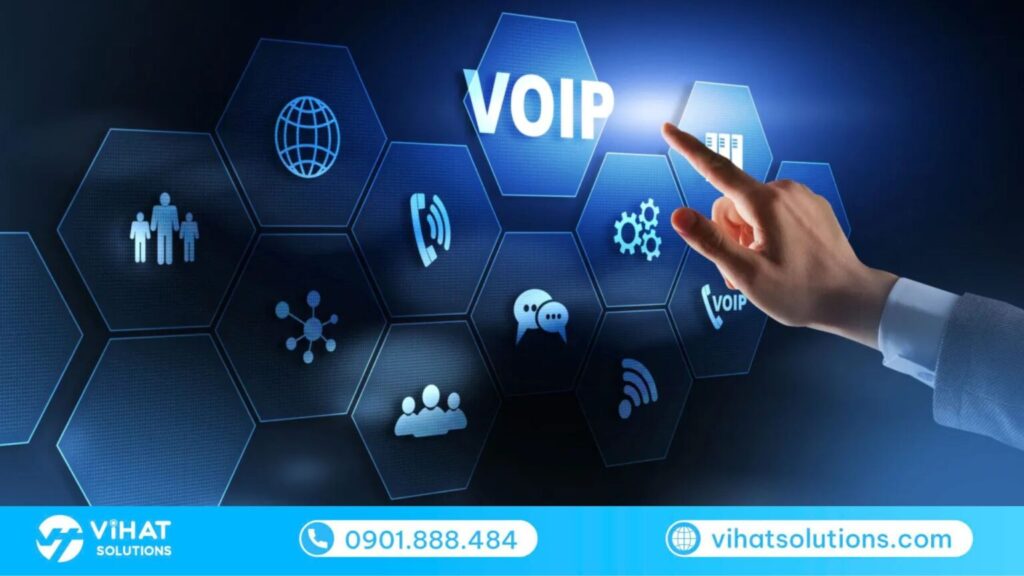
What is a landline phone number?
While many believe physical telephone systems are cheaper than virtual ones, between the cost of the physical equipment, local and long-distance call charges, additional line costs, and feature surcharges, they are often far more expensive than anticipated. Furthermore, such equipment is not only costly but also takes up valuable office space.
The real problem with relying solely on a standard telephone for work and personal communication? They quickly become obsolete. In fact, 40% of American households no longer have landline phones – meaning the technology won’t advance further and customer support will be harder to obtain.
What is a VoIP number?
VoIP – or Voice over Internet Protocol, is a telephone service that allows callers to make and receive phone calls over the internet.
In contrast to relying on copper wires, VoIP technology transmits calls using the same broadband internet connection provided by your router or WiFi network. Unlike standard telephones, VoIP networks are device-agnostic, meaning you can make or receive calls via your desktop computer, smartphone, or tablet.
Because you’re using a device you own to make calls, you don’t need to purchase any additional equipment. (Although many IP phone providers have compatible hardware such as video conferencing headsets available for interested parties.)
Most VoIP packages include unlimited local calls and a certain number of free long-distance minutes per month. Additionally, there are usually no setup fees, and advanced features are included in the monthly price, not charged in addition to the fixed amount you already pay. These systems are also scalable, meaning you avoid paying for additional features and phone lines you don’t yet need.
Studies show that, on average, companies switching from standard phones to VoIP save around $5,000 a year while gaining an additional $480 per user thanks to the increased productivity that virtual phones provide.
VoIP numbers also support video conferencing, SMS messaging, virtual voicemail, etc. – whereas standard phones support audio-only communication.
Finally, virtual phones offer a cloud-based Private PBX service that allows users to run their entire phone system over an existing online connection, further saving costs.
Learn about VoIP phone numbers
VoIP numbers for businesses and small enterprises offer a unique approach to numbers. Traditional telephone numbers are assigned locations, lines, and landlines by their respective telephone companies.
While on-site PBX systems mean desk phones can still route calls, that routing is limited to the physical location of the office.

Understanding VoIP Phone Numbers
What is a VoIP phone number?
Online numbers, sometimes called direct dial-in or access numbers (DIDs), eliminate these limitations.
DID numbers are not tied to a specific phone line or device, but to a specific individual, branch location, or department.
They work across PSTN and VoIP service providers by forwarding calls to multiple devices, IP addresses, and other phone numbers. This means customers can contact employees on their office phone, home phone, or mobile device – but employees only have to provide the customer with the online phone number.
This not only provides a higher level of privacy but also means employees are no longer tied to their desks, waiting for an important call to arrive. In addition, virtual numbers make it much easier for callers to directly contact agents, meaning more sales and better customer service.
Types of numbers for virtual call centers
Beyond the convenience they offer, virtual phone numbers are popular because they allow companies to choose from a variety of number types.
These include: Local numbers, toll-free numbers, and meaningless numbers.
What are local numbers?
Assigning area codes and local numbers is ideal for businesses with locations in multiple cities, as well as those that rely heavily on the trust of the local community. Local call center numbers not only make it easier for callers to connect with nearby agents but also reduce the cost of remote calls.
What are toll-free numbers?
Toll-free numbers (like 197) prevent callers from paying for expensive long-distance calls, as the cost goes to the recipient (your company). Because calls are made over the internet, you can also avoid high charges for international calls.
Additionally, toll-free numbers enhance the credibility of businesses of all sizes, giving them a more professional corporate image.
What are “no-numbers”?
No-numbers (e.g., 1-800-Help-Call, 1-900-Service-Call) make remembering numbers easier and help companies differentiate themselves from competitors.
Top Features of VoIP PBXs
The most important features to look for when evaluating a virtual phone are:
- Call forwarding
- Automatic call distribution (ACD)
- Call recording
- Integration with other business software
- Online faxing
- Business SMS text messaging
- Call analytics and reporting
- Mobile applications
- Voicemail to text and email
- Video conferencing
- Number forwarding to transfer existing contacts
- Ability to retain your old number
- Softphone capabilities
- Call screening and number blocking

Features of VoIP PBX
Benefits of VoIP PBX
In addition to a simpler setup process, cost savings, and advanced features that improve customer service, VoIP systems offer many other benefits.
Includes:
- Increased employee flexibility and mobility
- Improved communication for remote employees
- Customers have better opportunities to access representatives in person
- Reduced customer service resolution time
- Increased outbound sales calls
- Improved customer self-service options allowing employees to focus on more important tasks
- Additional communication methods (video conferencing, fax, SMS messaging, etc.)
- Fewer missed calls and lower call drop-off rates
- Better customer feedback through automated surveys
- In-depth call analytics providing insights into productivity, daily VoIP call volume, etc.
Short and simple installation process
24/7 service provider support
Disadvantages of VoIP PBX systems
While it’s clear that VoIP PBX offers many advantages over traditional telephone lines, there are a few drawbacks that need to be acknowledged.
The biggest drawback is that the virtual phone system depends on your internet connection’s uptime and bandwidth.
This means you’ll need to switch providers to accommodate your new phone system. Even then, if you lose power or experience connection problems, you won’t be able to make or receive calls until the internet is back online.
Finally, make sure you understand the types of VoIP taxes and fees that providers can and cannot legally charge you. However, even with these potential issues, VoIP PBX is still a better option than legacy telephones.
For best results, companies should have a standard office desk phone as a backup but primarily rely on VoIP calling for internal and external communication.
In short, to effectively route calls, you need to know how to use the features of a smart PBX system. Currently, the OMICall smart PBX system, with its modern, user-friendly features and constant updates, is a perfect choice for your business. OMICall provides a comprehensive solution, meeting the needs of companies, organizations, and businesses for a smart CLOUD PBX system.
VIHAT TECHNOLOGY Co., Ltd
Headquarters: ViHAT Building – 06 Street No. 16 (Him Lam Residential Area) – Hiep Binh Chanh Ward – Thu Duc District – Ho Chi Minh City
Hanoi Branch: Floor 15, LADECO Building, 266 Doi Can, Ba Dinh, Hanoi
Cambodia Branch: Thida Rath #154 St. 33MC, Sangkat Steung Meanchey, Khan Mean Chey, Phnom Penh

-
 What is Online Marketing? Types of Online Marketing
-
 What is Marketing Automation? Effective Business Applications
-
 Effective Product Marketing – Its Importance in Business
-
 What is a marketing funnel? 5 effective types of marketing funnels.
-
 What is a marketing strategy, and why is it important?
-
 What is churn rate? Ways to reduce customer churn rate.