What Is SIP Trunking? The Benefits of SIP Trunking and the Leading SIP Trunking Providers in Vietnam
Reading time: 7 minutes
SIP Trunking can significantly reduce costs and increase the reliability of your business phone system. To identify the right service for your business, you need to carefully research and evaluate your company’s communication needs.
SIP trunk pricing is based on a number of factors, such as your provider and any add-on features. As a small business owner, you are always looking for ways to cut costs and optimize your operations. SIP Trunking is an increasingly popular way for businesses to reduce phone expenses and improve telecommunications bandwidth, but it can be a confusing service to understand. We have broken down what SIP trunking is and how to know whether it is the right fit for your business.
What Is SIP Trunking?
Simply put, SIP trunks are virtual phone lines that allow you to make and receive calls over the internet to anyone in the world who has a phone number.
SIP (which stands for Session Initiation Protocol) is a widely used telephony protocol that initiates calls over the internet and is primarily used to manage multimedia communications, such as voice and video calls. SIP establishes and terminates connections for a phone call, controls data transmission, and is what enables services like Skype and Facebook Messenger to offer free calls anywhere in the world.
What Do You Understand About What SIP Trunking Delivers?
A “trunk” is a line or link that carries signals and connects nodes in a communications system — in other words, a pipeline that carries data channels within it to connect two locations.
SIP Trunking is a method of sending voice and other communications over the internet through a private branch exchange (IP PBX), which is a phone system within a business that routes calls between users on local lines while allowing them to share the use of external telephone lines.
A PBX reduces costs by avoiding the need for each user to have a dedicated line to a telephone company’s central office. SIP can be used to send and receive long-distance and local calls, text messages, and emails; to access the internet; and to conduct video conversations.
SIP Trunking replaces the traditional method used by the Public Switched Telephone Network (PSTN) — a copper wire circuit-switched network that requires a physical connection between two points to make a call. Instead, SIP trunks use a packet-switched network, which breaks voice calls into digital packets and sends them across the network to their destination.
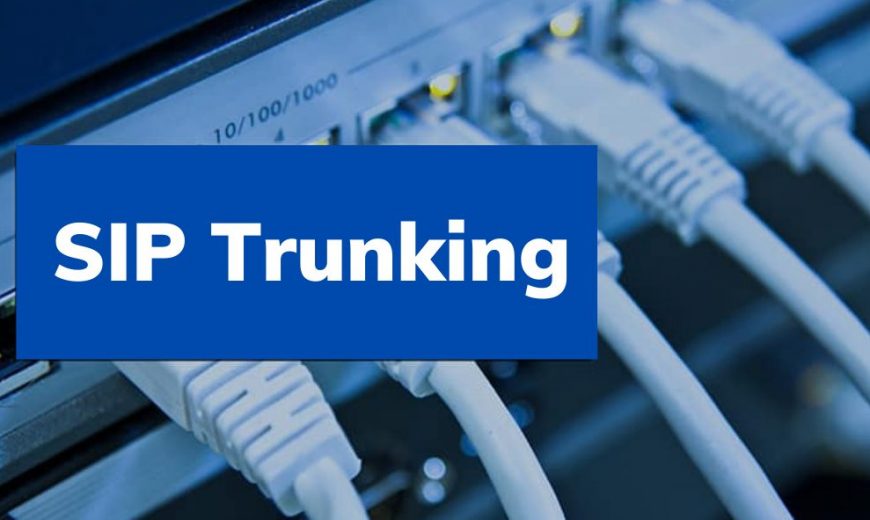
SIP Trunking
SIP Channels
Each SIP trunk can hold an unlimited number of channels. A channel or line is equivalent to one inbound or outbound call. Since each trunk can hold as many channels as needed, a business will only ever need one SIP trunk — regardless of how many simultaneous inbound and outbound calls you handle. The more phone calls you run at the same time, the more trunk channels you will need.
When looking for a SIP service provider, make sure you have an accurate estimate of the number of channels you will need in order to get an accurate quote, as many providers only charge you for the number of channels you actually require.
SIP vs. VoIP
SIP and VoIP (Voice over Internet Protocol) are similar in many ways, but they cannot be used interchangeably. “VoIP” is a broad term that can describe any internet-based phone service (including SIP), whereas SIP is a specific protocol that enables VoIP by establishing start and end points and defining messages during a call.
Benefits of SIP Trunking for Businesses
The greatest benefit of using SIP trunking as your business phone system is that it is highly cost-effective. This is due to several reasons, but primarily because it eliminates long-distance call charges. If your business regularly makes phone calls across the country or across oceans, SIP trunking may be the answer for you.
Consolidated Network
SIP also eliminates the need for both a separate data network and a phone network. Because SIP is IP-based, you can enjoy a consolidated network with extensive digital streaming capabilities that scales easily and requires no physical infrastructure — meaning no maintenance or hardware costs.
Eliminating the PSTN gateway allows SIP trunks to connect directly to your chosen Internet Telephony Service Provider (ITSP), removing subscription fees and giving you greater flexibility in how you expand your telecommunications services by offering more bandwidth upgrade options at lower prices.
Local Call Rates
A SIP trunk allows all calls to be treated as local calls by routing them over the internet, avoiding the costs associated with long-distance or international calls. The SIP trunk sends the call to the provider’s termination point, where it is transferred to the local PSTN, so you are only charged for a local call.
To compete with ITSPs, many SIP trunk providers have added services such as ENUM or phone number mapping, which allow you to use the same phone number regardless of where you are in the world. They also offer the removal of 800 numbers by providing a local number based on your location.
Scalability
SIP Trunking is flexible and easy to scale, with an unlimited number of channels permitted per trunk and no physical installation or setup required. New channels can be added and activated within hours.
Disaster Recovery
SIP trunk services tend to be far more resilient and flexible than legacy phone systems in the event of a disaster. Whether it is a network failure, natural disaster, or hardware malfunction, most services will have measures in place to ensure you can still make calls. These may include geographic redundancy, routing calls to different locations or data centers, or distributed network operations centers.
How to Deploy SIP Trunking
To transition from a traditional phone service to SIP trunking, start by determining the number of channels you need. This will depend on the size of your business and the number of phone calls you expect to take place simultaneously.
For example, companies with 100 or more employees should follow a 3-to-1 rule: for every three employees making calls, you should have one SIP channel. Companies with fewer than 100 employees will need more channels proportionally, because there is a higher likelihood of many people using the phone at the same time in a smaller office.
Next, assess whether you have sufficient bandwidth and a strong enough network to support SIP service. Also take inventory of whether you need to replace any desk phones with SIP-enabled IP phones.
Once you have an idea of how many channels you need, you can begin gathering quotes. Some of the best SIP trunk providers include 8×8, RingCentral, Jive, and Nextiva. Be sure to ask about a Session Border Controller (SBC), which acts like a firewall for SIP traffic and provides security against hacking and Denial of Service (DoS) attacks.
SIP Trunk Pricing
When calling a provider about SIP trunk pricing, remember to ask about setup fees, required equipment, and monthly service fees. Most businesses can expect to save around 75% on telecommunications fees by switching to SIP trunking. The price you are quoted will also vary depending on the number of IP-enabled handsets you need and whether you want to add additional features such as video conferencing or mobile forwarding.
These will be your main costs for SIP trunking:
- Subscription, including the price per channel
- Call rates, which are the cost per call or per minute for outbound calls
- Additional costs for add-on features
Installation Fees
For SIP trunk services, the average outbound call rate in North America ranges from 0.5 cents to 3 cents per minute. The average cost per channel is between $1.67 and $15 per month. Unlimited SIP trunk channels range from $19.99 to $29.99 per channel.
A cloud-based VoIP system can cost between $10 and $75 per user per month, whereas a traditional on-premise phone system can cost several thousand dollars in one-time equipment and installation fees, plus hundreds or thousands of dollars in monthly charges, depending on your call volume.
OMICall provides virtual PBX services for businesses. Contact us so we can help your business ASSERT ITS BUSINESS CLASS when choosing a virtual PBX solution.
VIHAT TECHNOLOGY Co., Ltd
Headquarters: ViHAT Building – 06 Street No. 16 (Him Lam Residential Area) – Hiep Binh Chanh Ward – Thu Duc District – Ho Chi Minh City
Hanoi Branch: Floor 15, LADECO Building, 266 Doi Can, Ba Dinh, Hanoi
Cambodia Branch: Thida Rath #154 St. 33MC, Sangkat Steung Meanchey, Khan Mean Chey, Phnom Penh

-
 What is Online Marketing? Types of Online Marketing
-
 What is Marketing Automation? Effective Business Applications
-
 Effective Product Marketing – Its Importance in Business
-
 What is a marketing funnel? 5 effective types of marketing funnels.
-
 What is a marketing strategy, and why is it important?
-
 What is churn rate? Ways to reduce customer churn rate.